Oh the places we will go...

Live in the places you want to learn about


Showing posts with label MPI104. Show all posts

Wednesday, 23 May 2012

All Things Japanese - Sayonara by Off Course

Beautiful :)

SAYONARA (GOODBYE)
by Off Course

I love this. I love a wide range of things, I try not to leave anything or anyone out, although I often fail, but this - I just absolutely ... love ..

^.^

Wednesday, 16 May 2012

All Things Japanese - Yakisoba (fried noodle dish)

Hey guys ^^) - have you found yourself wondering what you can cook up for dinner tonight, or tomorrow - or at midnight when you need a snack to just- keep- animating-! (that last one's not health check supported, ok? Especially if its all chocolate bunnies and cookies&cream ice-cream like me. So don't go cooking up really late at night - your arteries will clog up, die, rise up and Haunt you. Or you'll end up getting a sugar addiction and become too sweet for your own good... hahahahahaha : D)

Well - if you have, which is likely, I introduce... Yakisoba, a very very yummy dish:
YAKISOBA
by google images

Ok, so!  "Yakisoba" -  translates, according to my host mums, as literally "baked noodles". "yaki" reffering to the baking process and "soba" referring to the noodles. As you are probably aware, 'soba' is a style of noodles that are long, skinny (tradionally a mottled grey)and well associated with Japan.
chopping up sheets of soba noodles, image courtesy of this website on cuisine and restaurants 
Plain soba noodles are yummy-ish, if drowned in a lot of good sauce and eaten with chopped up shallots. The sauce is served hot in Winter and Cold in Summer. They also serve it at midnight on New Year's Day and it's good manners (like having a housewarming) to deliver "moving in soba" to new neighbours.There's probably a few other places its expected to show up, it's just that sort of ingrained culturally traditional meal that's survived the passing of time.

"moving in soba" - is hilariously alluded to "Angel Densetsu" a manga by the same author who brought us 'Claymore'. Angel Densetsu is one of her earliest, if not the earliest, published works by Yagi, Norihiro. It's available free on Mangareader.net - the link to the series here and the chapter specific right here.

 My first couple of nights in Japan included being introduced to home-made soba, and both the sauces. It was a little difficult to enjoy the first time to be honest. 


How to eat Soba from ChefTaro - who knows how to eat all sorts of Japanese dishes, and likes sharing his knowledge in fun, cartoon guides *^^*
It's not like in a stir-fry, all slightly baked and seasoned; eaten between bites of veggies...mmm...really could do with some stir-fry right now. But that's not..really... relevant... *gazes off into the distance*

Here's the minimalistic, traditional way of serving it, from the menu of a soba restaurant written about in this guys blog:
Draining on a sliced bamboo matt, the noodles are eaten with chopsticks
Traditional Soba, served in a restaurant. Image courtesy of the blog (see previous para)

The two small, shallow bowls are chopped shallots and garlic (to add to the sauce).
The green liquid is tea. The dark liquid is the sauce.
As you can imagine, dipping the noodles into that small cup and slurping them up after, creates quite a mess. Don't wear white, ok?

Soba noodles. Google images
Yakisoba noodles (the noodles used specifically for this dish) are not this kind of soba. In Australian supermarkets, they can be found in airless-sealed plastic packets; labelled "Hokkien Noodles".
Google images

Yakisoba recipes, apart from their base of noodles, usually vary wildly on the additional veggies. The traditional, and delicious whiel remaining simple version is: Hokkien noodles, baked in a frypan with oil; chopped up cabbage, tossed in with the noodles, sliced up carrot, sliced up onion, and fried up pork strips. Very quick and easy to make and eat. When you buy it from a shop however, it will normally also be served with pink crunchy pickled radish, with a sharp sour taste distinctive to pickles.

This great Yakisoba recipe can be found here:
This recipe, adapted to a more western-style taste-pallet, may appeal to to you more than cabbage, carrot and pork. Here they have shown how to include chicken, prawns, sesame seeds and egg.

Yaki soba noodles

Yaki soba noodles
Photography by Ben Dearnley
Use your noodle and make dinner quick and easy tonight!

Ingredients (serves 4)

  • 250g dried soba or ramen noodles (see note)
  • 100ml reduced-salt soy sauce
  • 3 teaspoons caster sugar
  • 1 teaspoon sesame oil
  • 2 tablespoons peanut oil
  • 150g green prawns, peeled, deveined, chopped
  • 1 cup beansprouts
  • 1 cup shredded cooked chicken
  • 1 carrot, peeled, cut into thin matchsticks
  • 3 green onions, thinly sliced diagonally
  • 1/2 red capsicum, thinly sliced
  • 2 eggs, lightly beaten
  • 1 tablespoon sesame seeds, toasted

Method

  1. Bring a large saucepan of water to the boil over high heat. Add noodles. Cook, uncovered, for 3 minutes or until just tender. Drain. Rinse under warm water. Set aside to drain.
  2. Combine soy sauce, sugar and sesame oil in a microwave-safe jug. Microwave on high (100%) for 1 minute or until hot. Stir and set aside.
  3. Heat peanut oil in a wok over high heat. Add prawns and stir-fry for 1 to 2 minutes or until prawns change colour. Add beansprouts, chicken, carrot, green onions, capsicum and soy mixture. Stir-fry for 1 minute. Add noodles and toss to combine.
  4. Pour egg over noodles. Cook, tossing gently, for 1 to 2 minutes or until egg just sets. Divide noodles between bowls. Sprinkle with sesame seeds. Serve.

Notes


Friday, 11 May 2012

All things Japan - The Sydney Japanese Film Festivall

Recapping a bit here;
This holidays you may have been like me, lucky enough to go to the Japanese film festival held on the second floor of Chifley Plaza; Sydney. Running from the 16th to the 20th of April, they screened interesting, quirky and popular films for a whole week, everyday at 2:00pm and 6:00pm. The adverstisement went:

Japanese Cinema Week

Promotional design from The official website

In 2012 The Japan Foundation Sydney will be showcasing Japanese cinema during the April, June and September school holidays. Broaden your horizons beyond Godzilla and Gamera and be introduced to the best of contemporary Japanese cinema. 

When: Monday 16 to Friday 20 April.
Where: Japan Foundation Multipurpose Room, Shop 23, Level 1, Chifley Plaza, 2 Chifley Square, Sydney.
What's On: Movies for children will screen at 2pm and movies for adults at 6.30 pm throughout the week. All films are in Japanese with English subtitles. 
More Information: You can download a program here. Admission is free but bookings are essential. Email reception@jpf.org.au or phone 02 8239 0055. Website www.jpf.org.au/index.html


I wanted to go for every screening all week, with my Sydney-sider older sister who told me about it; unfortunately due to delayed study, sudden work opportunities and I suppose.. poor time management.. I ended up seeing only one film. But hey - the Thursday screening of "Sumo Do, Sumo Don't" really was excellent So it all turned out ok :)

Available from the DVD Warehouse website
Sumo Do, Sumo Don't
According to movie information powerhouse IMDb; this film was released in 1992 (Hey! My birthday year :) That's nice)

Director: 

Masayuki Suo

Writer: 

Masayuki Suo

It's a foreign foreign language film (Japanese dialogue; optional english subtitles).
 Go see it. Really pretty fun. Synopsis: A struggling Sumo Wrestling club has to gain five members or it will close down; the resulting lack-lustre team of largely unwilling team-mates ensures that the road to a successful competition championship will not go smoothly. A comedy with romantic subplot; which detours briefly into examining Japanese culture in regards to a traditional sport, changing gender roles in sport... and where courage, stupidity, desire for friendship and sheer lack of options may get you.  : D

Sumo Do, Sumo Don't
The team :P (film still courtesy Asiabeam)
However, if you happen to be unfamiliar with Japanese manga and anime - ish storylines, you may find yourself a little.. befuzzled..
I watched it going - hey this is totally from a manga, look what they're doing - people who don't know manga would have no idea Why the plot turned out like that... (in saying that, I'm not sure that it was from a mange, or they just really used a lot of some kind of staple story features - the stereotyping of the foreigner's language skills + sneering attiitude towards japanese culture that undergoes an "enlightening" process; the larger, unpopular girl with courage and kindness whose determination leads her to recognition (not always victory) over her love-rivals; the effeminate boy whose male friends always force into cross-dressing and etc etc
Then again, I didn't ask my sister (a lapse, in hindsight) how she found it, so perhaps it was still interesting. Like watching the Harry Potter 4 movie without reading the book - they made a mess of that one.

ok, having done some hunting, here's the link to a blogger who's got a few more opinions to share on the whole affair.

But how is this all relevant now? It's all over now right?
...Well.
Here's the thing, it was a "testing audience reception" event in some ways - depending on how the whole event went down the organisers - The Japan Foundation, Sydney - are thinking of making it an annual or even bi-annual event, so if you missed out this time, you'll now be all wised up for next time. More thinking space :D
What's more, The Japan Foundation Sydney do a variety of events, workshops and programs throughout the entire year, so now that you've heard about it, you can go to their website and check it out yourself. ta-daa! here you go.
really, it seems like a good organisation people, with strong humanitarian motives behind a lot of their stuff - and that's just from me glancing at the front page; they make it very clear. So that's very good, can't have too much love and awareness in the world - and Heck Yes it's all Japanesey on the side, so that's great too.
Japanese peace crane - cheers google images

google images

Happy Drama viewing :D xx


Thursday, 5 April 2012

Assessment #1 blog post

Assessment #1 blog post; the summary...

=Blogger=
+ Posts: 8 This includes MPI104 related and theme related. My running theme was 'All Things Japan', which were the most interesting of my posts, about Japanese art and photography; Language skills and TV dramas; Celebrating your birthday overseas. I tried my best to be consistently interesting though... so feel free to read some of the others ^^)
+ Work done on aesthetics: In Template I customised my blog Template (from 'Travel'); where I also adjusted the widths, layout, and text fonts and colours. I tried for a colour scheme that matched up/complemented each part (i.e. text, background).
+ Comments on other blogs (and the links to the comments) can be found on this post - "Miscellaneous post commenting".
+ The tags I used: assessment blog, Birthdays, blogging, blog viewing, celebrating, comments, crucial post, delicious, first post, Flickr, Gifu FC, Gokusen, Hope Maguire, interesting topics, Japan, Japanese art, Japanese drama, language techniques., Matt Barron Lecturer, mpi104_2012, MPI104, New Gallery, Physical Japan, soccer fans, stacks.
+ Other work I've done on blogger:  I added gadgets to my sidebars (Fish, MP3 player, Diggs) and below posts bar. I re-arranged how the parts of the blog were set up in "Layout". I designed a favicon for my URL - so that ever time you have my blog URL up, it won't have the orange "B" for the blogger site, but my own symbol linking it visually to my site. I added two more pages to my MPI104 blog, that are URL links to the relating MPI104 Flickr and MPI104 Del.icio.us sites. I called the pages "Flickr PLace" and "MPI Del.ic.ious". In settings I checked on all the options and made sure it was formatted how I would like it - blog description, Header, sub header, language, time zone, commenting. I added personal information on the profile page, about my interests etc.
+ That's about it for blogger. Here is the link: Hope Maguire's Blog

=Del.icio.us=
+ The number of bookmarked web pages (Links) is 14.
+ Why these are of interest to me?- they're my hobbies/interests. Why I found them interesting is why I chose them as stacks: MPI104 - with 6 links (My own MPI104 sites - Flickr; Blog; Masterblog; and three other blogs I found interesting) is all course related, and I find this course interesting, I didn't know so much about these websites before, it's pretty cool :)
Mangamania links - with 3 links to manga websites - because I love Japanese manga, Korean Manhwa, and Chinese (not sure what they call it there) manga. And I thought, you know, if anyone else wanted to find out about it - here's the links to some informative, interesting places.
Fruit alone links - with 5 links to websites about just one specific fruit. Because one day I just suddenly pictured fruit as always being in a fruitbowl and I wanted to separate them up into "just an apple" etc, random yes, I think I was red-lining on the lack of sleep front - but fruit is good, its all bright colours and yummy tastes. Come on - who doesn't love fruit?
+ Links to my favourite three web pages:
on pears
a webcomic
a manga website for readings scanlations
+ Here is the link to my delicious profile

=Flickr=
+ Number of uploaded images: 32
+ My three favourite images mosaic plates, cup of tea, Nagasaki city sprawl (own); and by others: geisha; cuban cyclist; rabbit face (from my favourites section)
+ Here is the link to my Flickr stream

=thoughts=
So far it's been pretty interesting; learning about these online social/information sharing websites and ho wmany people use them and how/why they post their opinions and information on the web. Besides learning how to operate these sites, my faourite part of MPI104 has been learning a little bit of coding, and all the random, current geeky information that comes up in class. Definately a workshop a look forward to, in a Uni week. Cheers for the 'funness'.

MPI104 Flickr - new gallery

Hey guys!

Happy holidays/non-contact period! And remember: no touching for two weeks)
Just put up a gallery on Flickr which makes me giggle - and I made it - so I may be biased - check it out for yourself, you may be surprised by your face breaking out a grin. Or a rash.
I wont be held accountable for unexpected side-effects.

Have a wonderful break - and remember - if it's not broken... it might be about to be. -.o

interestingness gallery

Friday, 30 March 2012

Miscellaneous post commenting

So tonight I had fun trawling through a whole variety of interesting and random blogs and commenting occasionally - just showing appreciation for having gotten to read their unique thoughts.
For the assessment: Here are the links to the comments on: a megatokyo blog
a post on mine craft by a classmate, here from a classmate in my workshop - inspiring stuff Jacqueline :)You gave me some good ideas for animation. It's great to find another anime and manga appreciator. I wonder how many Vocaloid songs you know ;)?
And lastly, just exchanging quotes and Dr. Zuess mentions isn't a bad way to pass time.

For the Flicker comment posts here we go: On a image that made me think of my dear old mum On a pink rabbit face And also on a bridge over water (which I can't decide if it's been colour-shopped or not)...I can't link to the comment, only the image and the comment thread.
But there you have it, comments recorded.

Over and out chaps
(For now)


Thursday, 29 March 2012

All Things Japan - A birthday overseas


Have you ever had a Birthday party that blew your mind? 
Way to make your Birthday memorable idea #27 Go to a foreign country and celebrate it with a host family. 

My 19th Birthday Cake
Try to keep up with all the native festive traditions and remember to give your mum a call during the day.
It’s a blast – here’s the proof on Flickr Happy Birthday in Japan My 19th Birthday was celebrated with some of the warmest, kindest people I’ve met – my 2nd host family, living in an apartment, beside in Nagara River.


They gave me a cake that combined cream, sponge, crepes, fruit and chocolate decorations. To me – it does not get much better.
Xxxx

Delicious account

Today we created an MPI104 delicious account, here's my link with my first stack.

All Things Japan - Scenery, Art and Photography

Live in the place you want to learn about.
Seems about right.

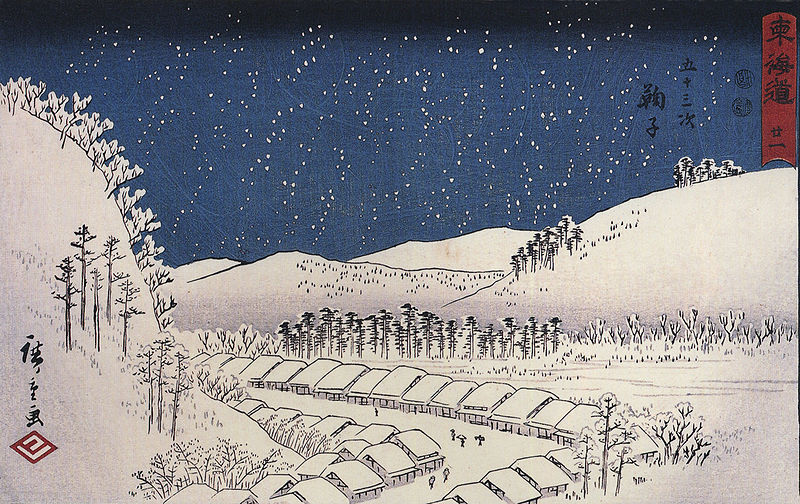
Being interested in the raw of nature I took a camera with me when I went travelling. Part of the appeal of travelling to a foreign land is the differences you hope to find or be surprised by. I was hoping for both when it came to the physical countryside of modern-day Japan.

Ancient Japanese art on nature is classic. It's elegant, minimalistic and wonderfully rich in the romantic aura of the wistful, the epic. I wonder whether this has swayed other minds on Japanese natural landscape - as it's portrayed so elegantly in Japanese calligraphy style ink tracings - languid mountains and barely-there details hidden by an evoked mist and fog.


Landscape: mountains, stream and houses provided by Google images.
From the website for the Smithsonian museum of Asian Art

Or the emptiness they fill with imagination. Giving less, so the viewer supplies more.

Hiroshige Snow falling on a town provided by Google images
From the Art history website

I went looking for what had inspired such art, armed with a camera and a hopeful expression.

Here is what I found..
Imperial Bridge - Kyushu
Golden Temple - Kyoto

Finding the natural beauty of Japan is not a lost cause, despite the statistics of housing demand and growing population costs seeming to threaten to swallow the natural landscape whole each year..

The city sprawl - Nagasaki

The view from my hotel window in Nagasaki.

Thankfully there are still places of wonder and colour, and often religious mystique ('Shinto' is the ancient traditional Japanese nature-worshipping religion. Most of the ancient wooden temples built on the mountain sides are from this peaceful, spiritual religion) to be found not only in the preserved wilds of the Japanese isles..
A small shrine - Kyushu
..but even in city centers:
Temple near my school - Gifu City, Honshu


I passed this Temple (and several others) just catching the bus to school every day, Gifu City.

For more images of the beautiful scenes of the modern day physical landscape of Japan - you are welcome to visit my flickr account.

For your own images, all I can say is best of luck 


– and a final tip – visit that same place at different times of the day, and in different weather. The mood, lighting and timing might just serve you a surprise, and make something extraordinary out of, forgive the cliché, ordinary ;)


Monday, 19 March 2012

All Things Japan - Japanese Dramas

How can watching Japanese Dramas help with retaining your language skills?

When I came home from Japan, I didn't want to lose my language skills from lack of opportunity to practise. Something occurred to me after waking up one morning - there was no one greeting me good morning in Japanese anymore. A friendly "O-hayou!" (He~llo!) or "Yoku neremashitaka?" (Was it a good sleep?). Or any other number of ritualistic morning phrases like inviting you to sit down and eat breakfast.

When you live in a foreign country for an extended period of time you get used to hearing the native language spoken as the conversation on the streets. It was such a strange feeling the first time I went to ask a stranger in the street a question when I got home - and marveling over the fact that I didn't need to worry about them not understanding me. Here, you rarely ask a stranger in the street and hear Japanese back. I mean, that would be random. Once you are home, you have left that world. If you want to keep in touch with that world filled with foreign words (whatever the language, wherever you went) and unique, endearing (and not-so endearing) customs, here are a few options to try and keep it alive. From the point of returning home on, it seems the job of keeping in touch with what you have left behind is up to you. You will need to create it yourself.

You could talk on the telephone, with someone who is still living there.
You can write e-mails and letters, and sound out the syllables as you go - although there is the problem of eventually you will reach the end of the paper, or the ink.
You can lament about it in your head, while listening to Classical music or music in that language (actually normally a quite interesting and engaging way of learning a language).
Or you can do something else, small, it doesn't have to be big. As long as you can keep the world alive in short bursts.

One way I love - is watching film.
Watching films and dramas in a foreign language is appealing not only for the indy cred. alternative cinematography to mainstream American, English and Australian options that we can find on our (now ever increasing it seems) TV channels.
The role of subtitles can be useful as a learning tool for learning new words, or to cover and check when you feel lost listening. Just beware of letting it become a crutch - you may become lulled into a false sense of confidence or comfortability, and find yourself just reading the plot while hearing the sounds but not (crucially) listening to the words. It's not impossible to concentrate on translating the words while enjoying the plot. Try it, give it a go. You might surprise yourself with your own level.

Download them in great lists onto your ipod, and watch them late into the hours of the morning, and sleep with the words calling to each other in your ears. O.k. so that's probably not the best advice for a balanced lifestyle - but hey, get your hands on some film and try to watch (and Listen) to it every day. Right before you go to sleep is best - then your subconscious level of cranial activity will carry on whirring away in Japanese while you sleep - like the sped up metabolism right after excersizing. So, if you're 'studying' the language and then put your brain on autopilot, for sleep, all this learning activity will carry on for a little while without you having any other input to distract it.

When I was an exchange student, they said the time when you start dreaming in a foreign language is a sign of a really good stage in your understanding levels. Not just random words either - don't feel too proud too early if you hear "carrot" or "good morning" over and over in your dream.
From watching foreign dramas or serials - characters names will become familiar, at any rate. Single words will leap out and embed themselves in your brain. You will find yourself saying things aloud - a whole word, in another language, whose meaning is buried deeper than the sound itself, repeated and repeated onto your grey cells.

Without further ado, here is this weeks Drama:

GOKUSEN


Synopsis
Idealistic new teacher Yamaguchi Kumiko seems to be out of her depth when greeted by her new class - the worst delinquents and dead-ends of the school, all in one classroom! However this bright-eyed new teacher, prone to breaking into soliloquies of idealism and optimism, appears to have an interesting background that keeps her from running away from this unexpected challenge...
For a more detailed (warning: spoilers) synopsis, check out MySoju.com - a drama website also with listed episodes for watching.

            Gokusen Season One - the original class
Directed and acted in lighter themes than the manga, followers of Morimoto Kozueko's 1999 eponymously titled manga may be disappointed by the lightness in which this TV adaption is directed and acted. However, despite this, it is an easy-watching comedy with a full cast of interesting characters interacting in an evolving way as the season progresses. And the action scenes Do improve as the season goes on..


Created in 2002, this manga-based drama went on to be extended into three seasons of successive casts, retaining the title character, and also, in 2009, a feature-film.

To trial the first episode, go to this youtube link and judge for yourself. With English Subtitles
A word of warning - as with most worthwhile things - don't give up too early.

For those interested in the original and more serious manga series, mangafox is a good platform to start your research.

For an insight into how Gokusen looks in the classic hand-drawn style of anime, check out this teaser trailer of the series available on   Youtube.

A final comment:
Use of language in Japan is often situation specific.
For a board meeting - remember Which characters said the words you are using.
"Good Morning" from a teacher character to another teacher character is likely to be much more polite than two school friends - despite the subtitles both saying "hello" (^-^)

Happy watching - mata ne! ([catch you] Later yeah)

Friday, 16 March 2012

First post - MPI104

Hellooo,
Sorry this is late - got a bit lost.
This is my first post, it is awesome
Welcome to Megatokyo
Now to find the master blog!